
Last Updated on January 21, 2026
Stand atop any of Scotland’s munros (mountains) in peak season, and you’ll understand why the country’s tourist numbers peak from June to August.
Similarly, poke around at the Christmas markets in Edinburgh during the holidays, and you’ll wonder why anyone would ever choose to elbow their way through Scotland’s summer crowds.
Two different experiences. Two completely different purposes. Both are fantastic excuses to plan a trip to this rich country, but when is the best time to visit Scotland?
It’s one of the main questions you’ll consider when planning your Scotland itinerary. Right up there with “what is haggis?” and “do Scotsmen really go commando under their kilts?”. (Yes!)
While the answers to the latter aren’t as important, the answer to the former is crucial so that you have the right expectations for your trip.
Luckily, if you’re looking for a stupidly detailed guide with nearly everything to consider when trying to pinpoint the best time to go to Scotland, come my friend, let’s have chat. It’s all here. Grab a pint and let’s dive in.
Please note that some links on my blog are affiliate links. If you choose to purchase through these links, I may receive a small commission at no extra cost to you. When What Do You Sea is supported in this way, you are helping me remain an independent travel blog where I can continue to create free and detailed guides. Read my full disclosure for more information.
When is the best time to visit Scotland?
The short answer: the best time to visit Scotland is May, June, September, and October.
These months make up the shoulder season, which is just before and right after peak season. During these months, you can expect fewer crowds, a reprieve on some pricing, and plenty of daylight hours for exploring.
And the long answer? Well, that’s the rest of this guide, as each season has its own lists of risks and trade-offs to consider. Are they worth it? That’s for you to decide.
Sometimes, the best time to visit depends on what you plan to see and do while you’re there.
I made this guide so you can compare each season and decide what will best suit your trip, because if you want to visit Christmas markets, October or May is sadly a bit early, unless you’re any major department store.
Before we dive into this guide, here are some questions to keep in your back pocket as you read:
Do you mind crowds?
Will you spend all your time in cities, or will you be in nature as well?
Are you traveling to Scotland on a budget?
Do you mind rain?
Weather in Scotland
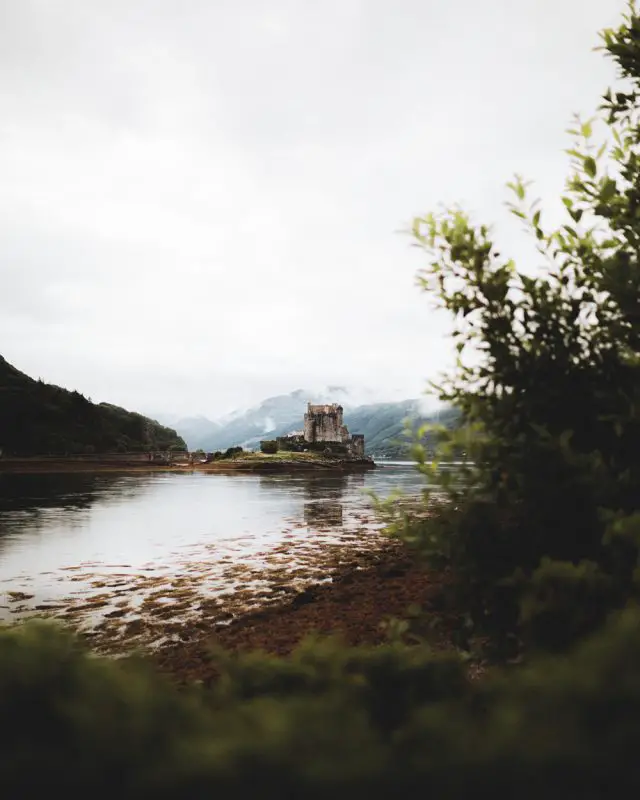
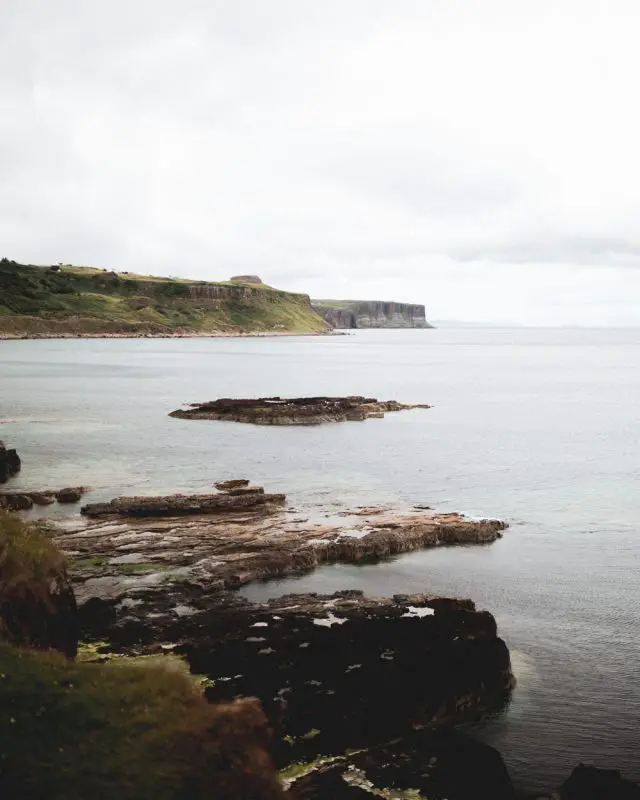
Scotland experiences four seasons, despite how far north the country is (as far north as Anchorage, Alaska, and St. Petersburg, Russia). Its climate is best described as oceanic, which means it is very cool, damp, rainy, and windy most of the year.
The weather here often gets a bad rep because you can experience all four seasons in a day, but as long as you pack proper layers, even a bit of rain can’t foil your plans.
Because of its latitude and location flanking two seas, the temperature only fluctuates about 20 degrees between the dead of winter (low 40 F (4 C)) and the peak of summer (mid 60 F (15 C)). An 80 F (27 C) day in Scotland is an anomaly, even in the middle of summer. Overall, the weather in Scotland is mild compared to the rest of Europe.
Scotland also experiences extreme variations in daylight hours, getting as little as seven hours in the winter and eighteen during the summer months. That’s something unique you should consider when you plan your trip.
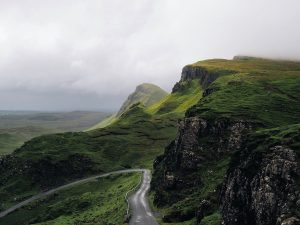
Summer in Scotland
June – August
Average temp: 65 F / 18 C
Average rainfall: 2-3 inches
Daylight hours: 17-18 hours
Midges. Verdant. Tourists. Crowds. Sun.
That’s how I would describe Scotland in the summertime. It boasts the best weather for outdoor activities, and therefore, that’s when everyone plans their trips here.
Early June in Scotland is a solid window to shoot for if you want to visit during peak season, but want a slight buffer before the wave of crowds. Scottish schools are generally on summer break by this time, and local families start to travel around in the latter half of the month.
This month usually boasts favorable weather, and the country’s vibrancy is on full display. Don’t forget the summer solstice falls in June, which will give you up to 18 hours of daylight to play with. Those early sunrises (around 4 a.m.) and late sunsets (9 – 10 p.m.) offer windows of opportunity to put a buffer between you and the masses.
July and August are peak tourism months in Scotland. You should weigh the pros and cons before you book your trip during these months, and most definitely book as far in advance as you can.
While these months trend on the dry side, it doesn’t usually stay that way for any length of time, so don’t bank on the weather cooperating for your trip because of the season.
The allure of the countryside and historic cities can be lost in the sheer number of people you have to elbow your way through to see the most popular sites. And don’t get me started on all the bus tours on the Isle of Skye and campervans clogging up the North Coast 500.
[ My experience: I visited Scotland in mid-July. I was in the United Kingdom for the British World Championships for taekwondo, so the timing of my Scotland trip depended on where the dates of the tournament fell. Unfortunately, I did turn up at the same time as everyone else. Scotland was going through a heat wave at that time, so there was minimal rain, but that was considered very unusual. I was there for almost two weeks, and it rained maybe two days over the entire trip. ]
Most locals would agree with me that August is the worst month to visit Scotland, unless you’re planning on attending the Edinburgh Fringe Festival. Think bursting at the seams with people, extortion-level pricing for accommodation and tours, and an endless supply of frustrated locals. I can’t blame them.
Things to do during summer in Scotland:
Edinburgh Film Festival (June)
Edinburgh Fringe Festival (August)
Go hiking in the Scottish Highlands
Tee up on the golf courses in St. Andrews
Watch the Highland Games
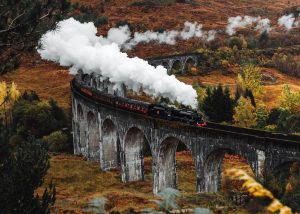
Fall in Scotland
September and October
Average temp: 50 F / 10 C
Average rainfall: 5 inches
Daylight hours: 12 hours
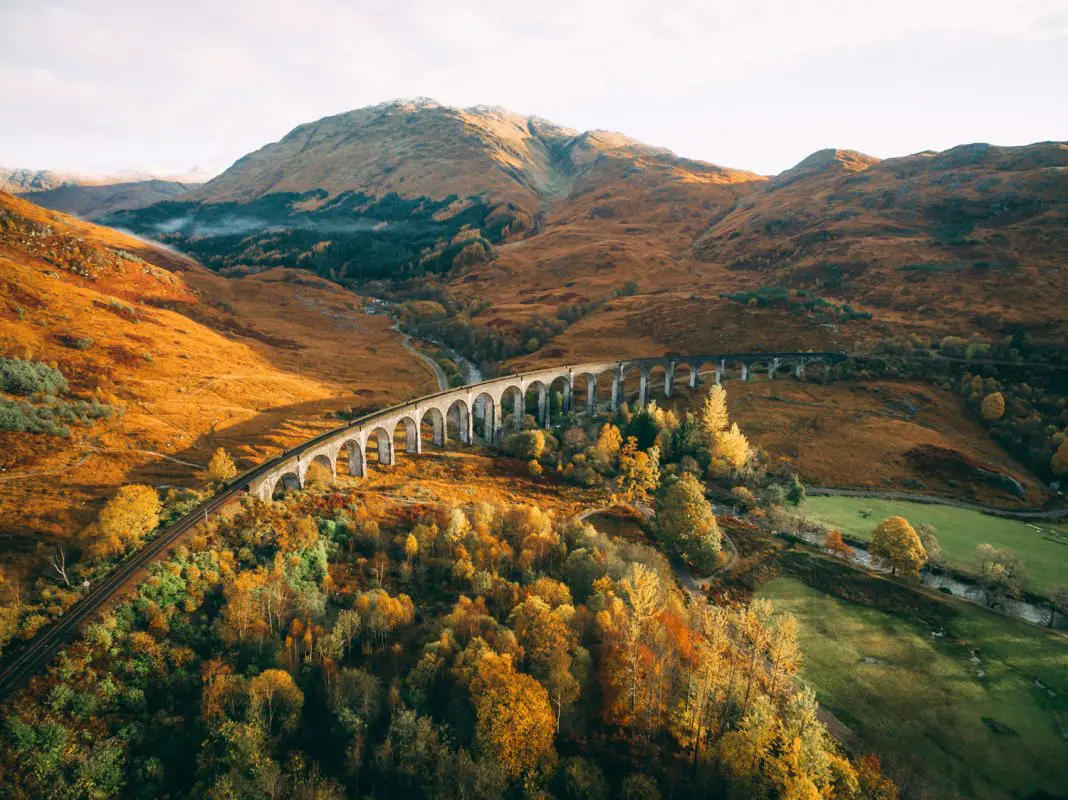
Autumn in Scotland offers cozy weather and beautiful fall foliage.
These two months are considered the shoulder season in Scotland, so you can expect the summer crowds to have thinned out and some pricing to be cheaper this time of year.
The beginning of the season will start with ample daylight hours, but begin to dwindle as the country moves into winter. If you want to plan your trip around fall foliage, shoot for late October since that’s when Scotland finally begins to shed its vibrant green.
September is hands down one of the best times to visit Scotland.
This month is brimming with celebrations and a bunch of different activities as the season transitions into fall. At the beginning of the month, you can still expect the feeling of summer and the countryside to be green.
All of the schools in the United Kingdom will be back in session by the end of the month. Although September is still pretty popular for travelers, it’s just not as bad as the summer crowds.
The largest gathering for the Highland Games, the Braemar, takes place in September and features athletic events, piping, and dance competitions. It’s held in a different, stunning location each year near Pitlochry, and worth going to feel the spirit of Scotland come alive.
October in Scotland is finally the middle of autumn, and all around the country, all the green begins to fade into golden foliage. The whole country will be drenched in gold, orange, and red hues by the beginning of November.
Despite the weather cooling slightly and summer finally fading, October is cozy and ideal for exploring cities or squeezing in trips to the Highlands. Crowds this month will have thinned even further, and prices will go down as winter approaches.
There’s something about the fog and chilly vibe of autumn that fits perfectly into the cobblestone streets of Edinburgh. This is the perfect time to take full advantage of ghost tours, cemetery wanderings for Tom Riddle, and join the locals at the Edinburgh Coffee Festival to warm up. Many people also enjoy celebrating Halloween in Scotland.
Things to do during fall in Scotland:
Explore Harry Potter filming locations around Edinburgh
Join a Scottish whisky tasting
Grub on traditional Scottish comfort food in Glasgow
Visit the Isle of Skye
Go to the Outer Hebrides during oyster season
Kayak on Loch Lomond
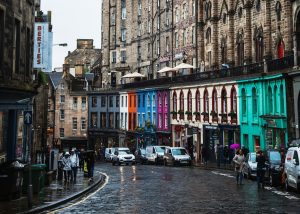
Winter in Scotland
November – February
Average temp: 42 F / 5 C
Average rainfall: 5.0 inches
Daylight hours: 7 hours
Winter is, objectively, one of the worst times to visit Scotland for most travelers. Daylight hours are extremely limited, with sunsets as early as 4 p.m., and the weather is wet, windy, and cold.
If you don’t mind the challenge of snow-capped peaks and bad weather spells, you may just be able to brave a Scottish winter. Ferries do not operate this time of year, accommodation options are significantly reduced, and some natural attractions may be inaccessible depending on your abilities.
November is one of the cheapest times of year to visit Scotland. Halfway through the month, the Christmas decorations go up around Edinburgh and Glasgow, so if you’re looking for an early holiday getaway, plan your visit around that time.
The first half of the month tends to run a bit warmer, so you could catch some late autumn leaves at the beginning of November before the snow comes. The latter half of the month brings the cold front, and snow is likely, especially in the north and east.
December is one of the wettest and coldest months of the year in Scotland, but this month has many reasons to beckon a visit.
Holiday decorations are in full swing this month, Christmas markets are brimming, and the anticipation of the New Year is around the corner. Edinburgh is a fantastic city to be in for Christmas or New Year’s, despite it being so cold. As long as you pack plenty of layers and a good rain jacket, you’ll have an enjoyable trip.
The Scots know two things very well: how to throw a party and how to welcome you to that party. Hospitable locals and a celebratory time of year are a match made in heaven. One thing is for sure, you won’t be bored.
The highlands and islands are typically inaccessible this time of year, so this month is not recommended if you want to explore the outdoors (unless you have proper experience and gear). December is for gluttony and shopping, the two great things about the holiday season.
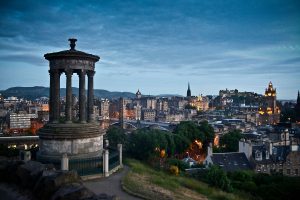
January is the coldest month of the year in Scotland, but because winters are mild, you won’t need to worry about below-freezing temperatures. Snow is possible, but that will only add to the city’s beauty.
Most travelers visit Scotland in January to celebrate the New Year, known here as Hogmanay. It’s a good month to celebrate with locals, snuggle up in cozy coffee shops, and explore cities like Edinburgh, Aberdeen, and Glasgow.
As for outdoor activities, it’s ideal if you want to hit the slopes in the Cairngorms. Otherwise, it’s best to plan your trip for the late spring if you want to go hiking or camping in the Scottish Highlands or the Western Isles. January can be very wet and cold, and without the right gear, getting outdoors will be miserable.
When February hits Scotland, the weather begins warming up, but not by much compared to January. February is another horrible time to visit Scotland. I would avoid this month.
Things to do during winter in Scotland:
Up Helly Aa (last Tuesday in January)
Hogmanay (December)
Explore Christmas Markets in Edinburgh and Glasgow
Go skiing at Cairngorms National Park
Celebrate St. Andrews Day (Nov. 30th)
Stay up to try and spot the Northern Lights
Spring in Scotland
March – May
Average temp: 49 F / 9 C
Average rainfall: 4.4 inches
Daylight hours: 12 hours
Spring officially begins in Scotland on March 1st and wraps up at the end of May.
Don’t be fooled, though, for a true visit during springtime, aim for April. The feeling of spring normally arrives around the second week of April, and as temperatures rise in May, it becomes one of the best months to visit Scotland.
During March, Scotland transitions slowly out of the cold winter into the warmth of spring. The frost slowly melts, and small signs of spring arrive by the end of the month.
The Scottish Highlands typically stay cold until April or May, with many mountain peaks still blanketed in snow. If you’re looking to hike, come prepared.
April brings the rich green tones that Scotland is so famous for.
The highlands and lowlands have fully emerged from winter hibernation this month and come alive with new life. Daylight hours this month are surprisingly long for spring, and both sunny and balmy days stretch out over the entire month.
By May, it feels like summer with the increase in crowds, daytime temperatures, and number of daylight hours. If you plan your trip at the beginning of the month, you’ll still be able to catch some deals if you’re looking to travel on a budget. Midges are awake this month, but not in their full expression.
If you are shooting for this month, I still recommend booking in advance as it’s a popular month for seasoned travelers and retirees.
Things to do during spring in Scotland:
Venture to any of Scotland’s historic castles and ruins
Visit the Royal Botanic Garden Edinburgh
Road trip the countryside for spring blooms
Explore the north coast Scottish Isles
Go island hopping
Take a hike in the Cairngorms National Park
Drive the North Coast 500
If you’re looking to avoid something specific, here’s the short list.
Best Time to visit Scotland to avoid crowds
September to early May
These three seasons are significantly lower in popularity than the summer months, so crowds are much thinner.
Best time to go to Scotland to avoid midges
September to May
These small flies prefer warm and wet weather, so their ideal habitat is a Scottish summer. By visiting in the cooler months, most of them die off, and they aren’t nearly as big a nuisance.
Best time to visit the Scottish Highlands
April to September
If you can manage it, avoid the months of July and August since it can get crowded. If you can’t, there are plenty of places you can go to get some solitude.
Best time to go to Scotland’s Western Isles
April, May, June, and September
These months are nice and dry with plenty of daylight hours for exploring. Since accommodation and transport are limited in these areas, make sure to book everything in advance.
July and August can also be great times to go to this area, but it’s the busiest time of year with the most crowds.
Worst Time to Visit Scotland
August (unless you plan on celebrating the Edinburgh Fringe Festival), February, and March
Because of this month-long festival, the price of everything skyrockets, and crowds are at an all-time high. Nearly everything (tours, car rentals, etc.) is sold out and booked months in advance.
Also, not to mention, it’s the worst month for midges in the Scottish Highlands, so even if you plan on escaping the city, those little bugs will follow (and annoy you) everywhere.
Besides that, February and March are two other months I recommend avoiding. It’s cold, dark at 4 p.m. and most Scots are begging for winter to melt into spring.
Cheapest time of year to visit Scotland
November and mid-March (excluding Christmas and New Year’s)
Since the winter weather isn’t ideal and it’s the official off-season, you can grab cheap flights and affordable accommodation. When searching, look outside of holidays like Christmas and New Year’s during these months because prices are inflated for them.
If you have any other questions about visiting Scotland, please reach out! Otherwise, browse my other Scotland guides to help you plan your trip:
Best Things To Do in Edinburgh (coming soon)
32 Tips For Traveling Scotland On A Budget
How To Get From Edinburgh to the Isle of Skye
Is the Isle of Skye Worth Visiting?
Where to Stay on the Isle of Skye
Best Coffee Shops In Edinburgh

Did you find this guide on the best time to visit Scotland useful? Save it for later on Pinterest!

I’m a teacher so I have specific breaks that I have to travel during. If choosing between April and summer (only a week in April, late June-end of August), when would be the best time to visit the islands (Isle of Skye, Hebrides, etc.)?
Hi! Is good weather important in your decision?